Berries greenhouses
Substrate-grown berries extend the season and raise picking speed. We build glass and film greenhouses with gutter systems, low-EC irrigation and the climate control that berries need.
- Typical yield, strawberry a year
- 8–12 kg/m²
Growing berries under glass
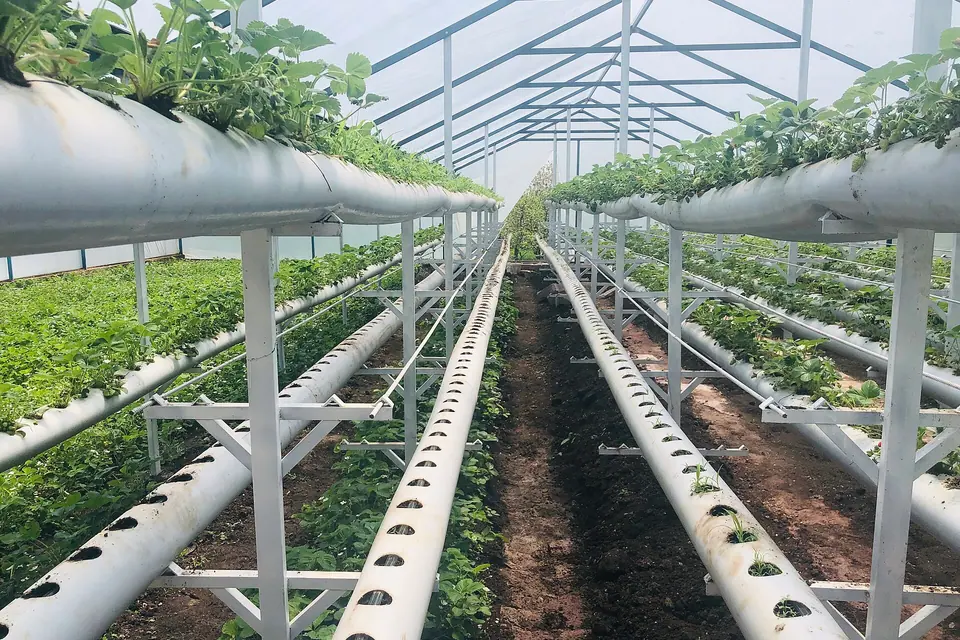
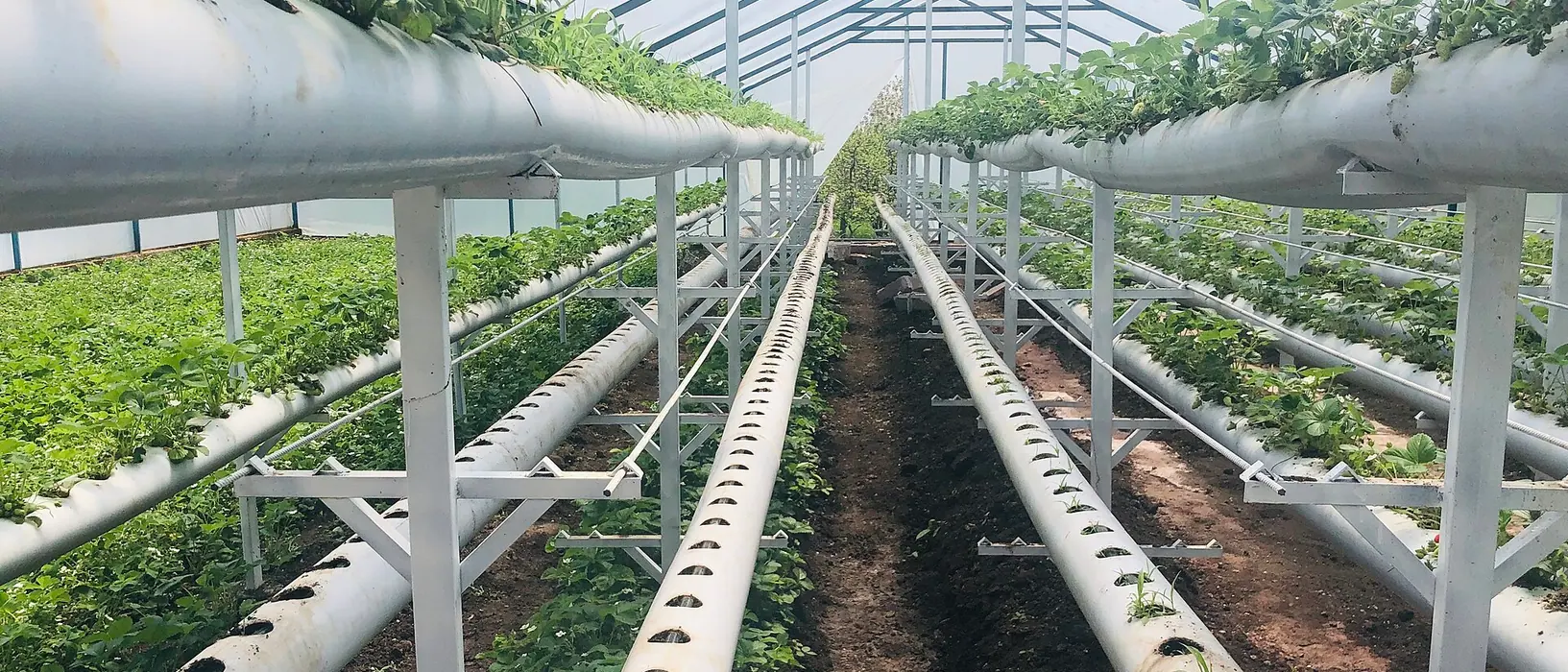
Strawberry has moved from the field to the gutter. Grown in coco substrate on hanging or table-top gutters, the fruit hangs clean at picking height, the season is planned by planting date and plant type, and water and nutrition are controlled at each dripper. Raspberry and blueberry follow the same logic in pots: long-cane raspberry plants, and blueberries in an acidic substrate.
Berries need a different greenhouse from fruiting vegetables. Temperatures are lower, nights are cool, and the plants are sensitive to salt, so water quality and a low-EC irrigation strategy are decisive. Humidity has to stay moderate to keep Botrytis and powdery mildew away from the fruit. Because berries are soft, the cold chain starts within hours of picking, and the packing area is planned accordingly.
Depends on variety type, number of plantings, plant quality and lighting; lit everbearing crops can exceed this range and unheated tunnels sit below it.
Optimal greenhouse parameters
| Gutter height | 4.5–6 m |
|---|---|
| Temperature, day / night | 16–24 °C / 8–12 °C for strawberry |
| Relative humidity | 60–75% |
| Daily light integral | 12–20 mol/m² per day; lighting typically 100–200 µmol/m²/s in winter crops |
| Irrigation EC / pH | 1.2–2.0 mS/cm / 5.5–6.0; blueberry needs pH 4.5–5.5 |
| Plant density | 8–12 strawberry plants per m² on gutters |
| CO2 level | 600–900 ppm |
Typical ranges, refined per variety and climate.
The configuration we recommend
A starting point. We adjust it to your site and budget.
Glass or double-film multi-span greenhouse
Film suits spring-to-autumn cropping in mild climates, while heated glass supports winter production.
Hanging gutters with coco substrate
The fruit hangs free at picking height, which raises picking speed and keeps berries clean.
Low-EC drip irrigation with clean water
Strawberry is salt-sensitive, so rainwater or reverse-osmosis water protects yield and fruit size.
Pipe heating below the gutters
A minimum pipe temperature with morning ventilation keeps the crop dry and limits Botrytis.
Cold room next to the greenhouse
Field heat has to be removed within hours of picking to preserve shelf life.
Solutions that matter most
Hydroponic & substrate systemsHanging gutters and coco substrate are the standard for greenhouse strawberry.
Irrigation & fertigationSalt-sensitive berries need exact low-EC dosing and good source water.
Plant protection & IPMFruit is picked every few days, so thrips, spider mite and mildew are managed with predators and climate.
Packaging & post-harvestRapid cooling to around 0–2 °C and gentle packing protect a soft product.
What drives the business case
We build the financial model with your own prices and costs. These are the levers that move it most.
| Driver | What moves it |
|---|---|
| Yield per m² | Variety type, plant quality, number of plantings per year and lighting |
| Sales price | Out-of-season availability, fruit size, flavour, shelf life and pack format |
| Labour cost per kg | Picking is the largest cost; gutter height and fruit presentation set picking speed |
| Plant material cost | Plants are renewed every cycle and are often imported |
| Energy and capital cost | Lower temperatures than vegetables reduce heating; glass and lighting raise investment |
Best practices
What our agronomists hold to in our own greenhouse and on client sites.
Start with good plants
Yield is largely set by the tray or frigo plant: crown size, flower initiation and health on arrival.
Watch sodium and chloride
Analyse source and drain water regularly and keep EC low. Salt damage shows first as leaf-edge burn and small fruit.
Pollinate fully
Bumblebees and a good flower climate give evenly shaped fruit; poor pollination shows as misshapen berries.
Keep the crop dry
Ventilate with a minimum pipe temperature in the morning and avoid condensation on the fruit to limit Botrytis.
Pick often and cool fast
Harvest every two to three days at the right colour stage and move fruit to the cold room within hours.
Berries projects
All projectsOnly Baku Greenhouse Complex is a real project. The others are samples that show the layout and will be replaced with real references.
Questions we are asked
If yours is not here, write to us. An engineer replies within two working days.
Is strawberry viable in a hot climate?
Strawberry prefers cool nights, so in hot lowland climates production is limited to the cool season unless substantial cooling is installed. Highland sites and continental climates with cold winters are easier. We check night temperatures month by month before recommending the crop.
June-bearing or everbearing varieties?
June-bearers give concentrated harvests and are scheduled through planting dates and cold-stored plants. Everbearers flower continuously and spread production and labour over many months. The choice depends on market window, climate and labour availability, and many growers combine both.
Can raspberry and blueberry be grown the same way?
Both are grown in pots under cover with drip irrigation. Long-cane raspberry is cropped from cold-stored canes; blueberry is a perennial that needs an acidic substrate and several years to reach full yield. Each needs its own irrigation recipe.
Plan your berries greenhouse
Tell us the country, the crop and the area. You get a confirmation at once and an engineer’s reply within two working days.
- Preliminary layout and budget range
- A visit to our 20-hectare reference greenhouse
- Support in English, Russian and Azerbaijani