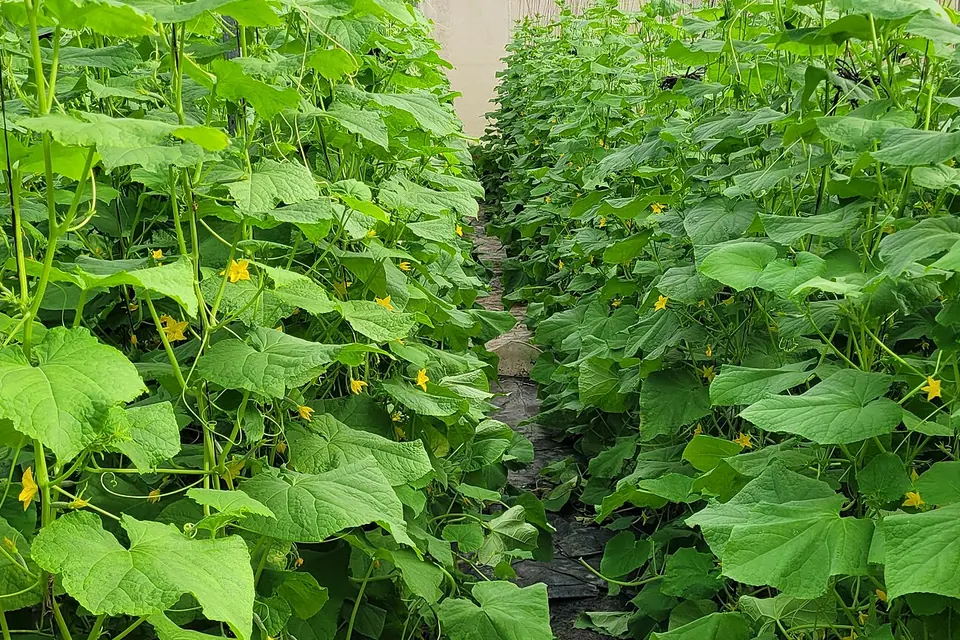
Irrigation & fertigation
We build the complete water system, from source water treatment and storage to dosing units, drip lines and recirculation, sized on the peak demand of the crop.
- less water and fertiliser with closed-loop irrigation
- 20–30%
- Technology partners
- Netafim, Priva, Stolze
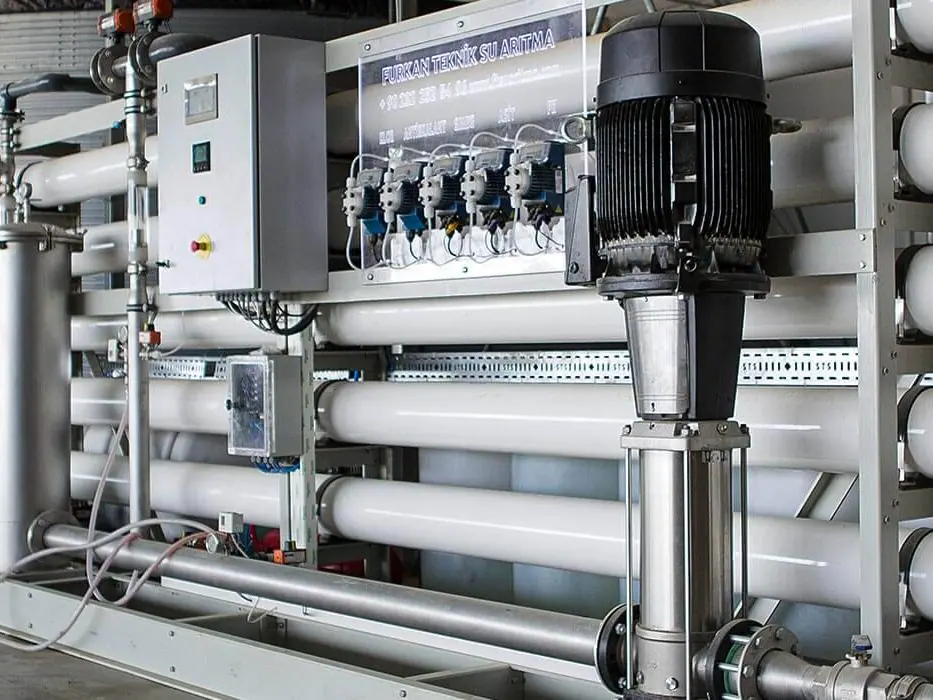
What it is
In substrate cultivation the irrigation unit is the plant’s only source of water and nutrients. It doses stock fertilisers into the supply water to a set EC and pH, then delivers small, equal volumes to every dripper many times a day. The frequency follows the radiation sum, so the crop receives more on bright days and less on dull ones.
A closed loop collects the drain, disinfects it and blends it back into the supply. Compared with free drainage this typically saves 20–30% of water and fertiliser, and it keeps nutrients out of the ground. The design starts with a laboratory analysis of the source water; where it is saline or hard, we add reverse osmosis, acid dosing or rainwater storage.
What it includes
- Water intake and treatment
- Filtration and, where the analysis requires it, reverse osmosis or acid correction of the source water.
- Storage
- Lined basins or steel silos for clean water, drain water and disinfected drain, with reserve for peak days.
- Fertiliser dosing unit
- A and B stock tanks plus acid, injected into the supply water to the set EC and pH.
- Drip system
- Pressure-compensated, non-leakage drippers on polyethylene laterals, divided into valve sections per compartment.
- Drain disinfection
- UV or heat treatment of return water before it re-enters the mixing tank.
- Control and measurement
- Irrigation starts on radiation sum and time, with EC, pH and drain volume measured per section.
Options and configurations
The choice follows the crop, the climate and the size of the investment.
Closed-loop drip on substrate
Drip supply with full drain collection, disinfection and reuse. This is the reference system for high-tech vegetable production.
Best suited toTomato, cucumber, pepper, berries and roses on substrate
Free-drain drip
Drip supply without drain reuse. It is simpler and cheaper to build, but water and fertiliser use are higher and the discharge has to be managed.
Best suited toSmall first phases where water is plentiful and discharge is permitted
NFT and pond recirculation
Nutrient solution circulates continuously through channels or ponds, with dosing and oxygen control on the return tank.
Best suited toLettuce, herbs and leafy greens
Ebb-and-flood
Benches or concrete floors are flooded for a few minutes and drained back to the tank.
Best suited toPotted plants, potted herbs and young-plant production
Technical specifications
Typical ranges for high-tech greenhouses. The exact figures for your project are calculated at the design stage.
| Dripper output | Typically 2 L/h, pressure-compensated with non-leakage function |
|---|---|
| Supply EC | Typically 2.5–3.5 mS/cm for fruiting vegetables; lower for leafy crops and berries |
| Supply pH | Typically 5.5–6.0 |
| Stock solution | A and B tanks, commonly at 100-fold concentration |
| Peak daily supply | Typically 6–10 L/m² on a summer day, depending on climate and crop |
| Irrigation cycles | Typically 10–30 a day, at 80–150 ml per dripper per cycle |
| UV disinfection dose | Commonly 100 mJ/cm² against fungi and bacteria; 250 mJ/cm² against viruses |
What you gain
Water accounted for
Supply and drain are measured per section, so water use per kilogram of produce becomes a known figure.
Inputs returned to the crop
Reused drain delivers its water and nutrients to the plants instead of the ground.
Uniform supply
Pressure compensation gives every plant the same volume, whatever its distance from the valve.
A steering tool
Start time, stop time, cycle size and EC are the grower’s main levers to steer a crop towards growth or towards fruit.
Fit for difficult water
Treatment is designed from the analysis, so brackish wells and hard water can still feed a recirculating system.
Projects using this solution
All projects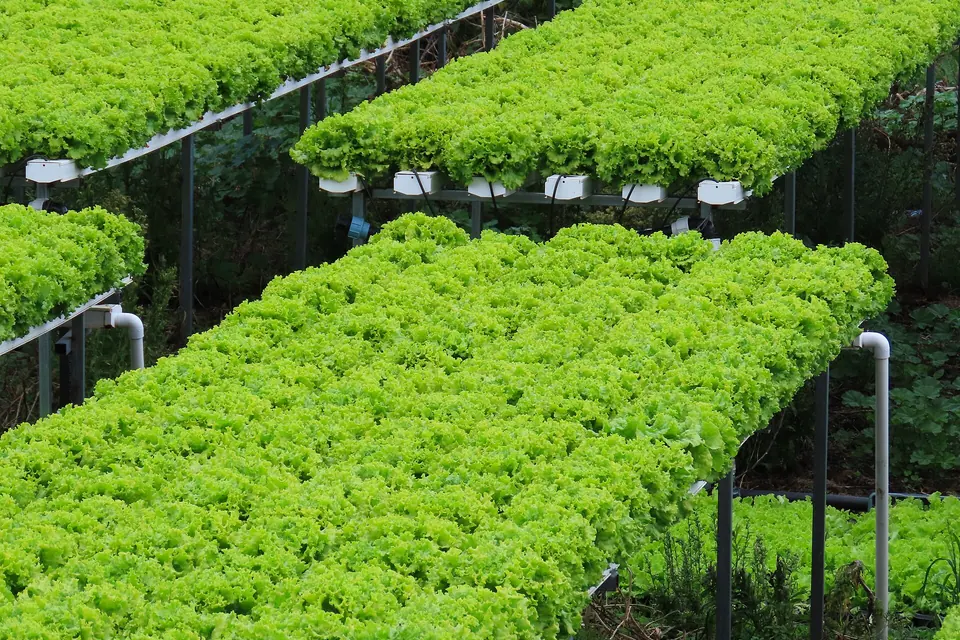
AE · United Arab Emirates Demo
3-hectare leafy greens facility, Abu Dhabi
- Crop
- Lettuce & herbs
- Area
- 3 ha
- Handover
- 2025
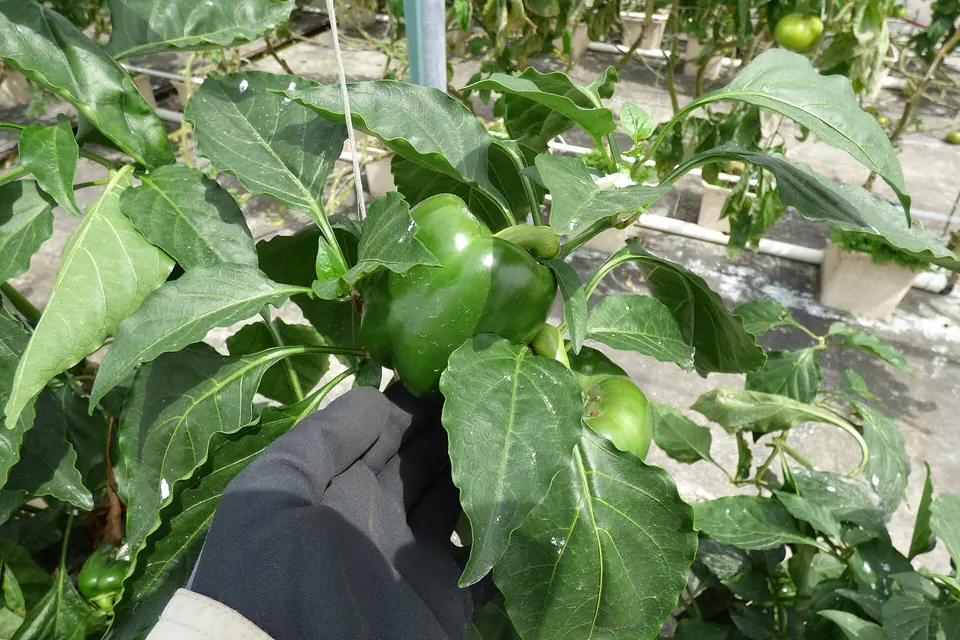
Only Baku Greenhouse Complex is a real project. The others are samples that show the layout and will be replaced with real references.
Questions we are asked
If yours is not here, write to us. An engineer replies within two working days.
How much water does a hectare of greenhouse use?
For a high-wire vegetable crop, irrigation typically takes roughly 8,000–12,000 m³ per hectare a year, depending on climate, crop and the degree of recirculation. Evaporative cooling adds its own demand in hot regions. Storage and pumps are sized on the peak day, not on the annual average.
Is rainwater collection worthwhile?
Usually yes, where annual rainfall is meaningful. Roof water is low in sodium, which makes it the best base for recirculation, and the gutters already collect it. In arid regions the roof yield is small and reverse osmosis of well water becomes the main source.
UV or heat disinfection of drain water?
Both are proven. UV units use less energy and are the common choice, but they need good pre-filtration because turbid water blocks the light. Heat treatment is insensitive to water clarity and uses more energy, so the choice follows drain volume and the pathogens of concern.
What if our source water is saline?
Sodium and chloride are barely taken up by the crop and accumulate in a recirculating system. Above the tolerance of the crop, drain has to be discharged, which wastes water and fertiliser. Reverse osmosis for part or all of the supply solves this, and its capacity is calculated from the water analysis.
Get a quote for irrigation & fertigation
Tell us the country, the crop and the area. You get a confirmation at once and an engineer’s reply within two working days.
- Preliminary layout and budget range
- A visit to our 20-hectare reference greenhouse
- Support in English, Russian and Azerbaijani