Lighting solutions
We prepare the light plan, the electrical infrastructure and the control strategy for supplemental lighting, so that winter production rests on calculated light sums.
- less electricity with LED than HPS at the same light level
- up to 40%
- Technology partners
- Stolze, Priva
What it is
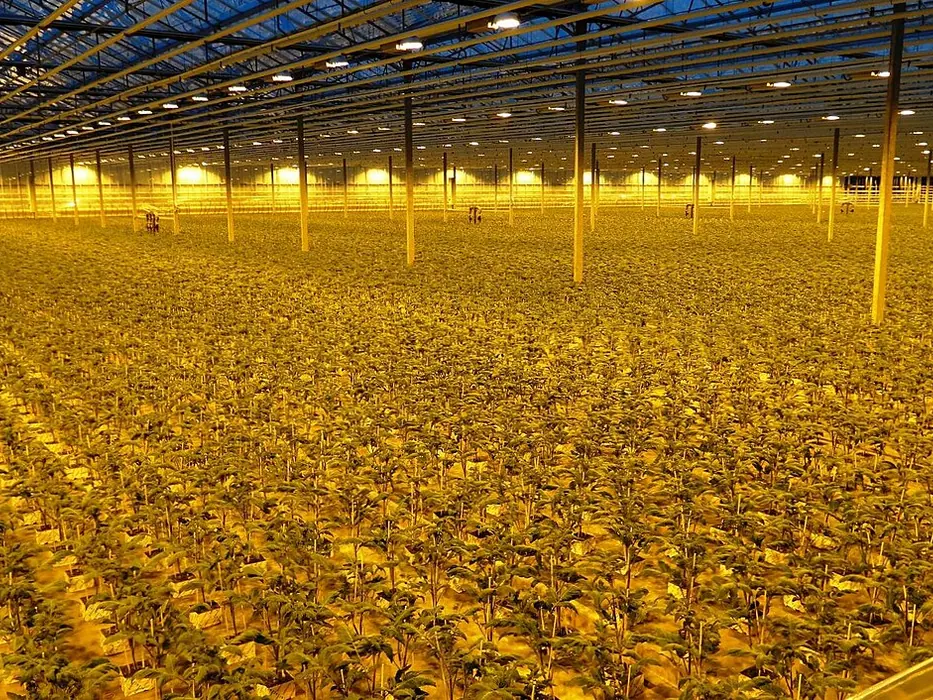
In continental and northern winters, natural light limits yield. A widely used rule of thumb is that one per cent more light gives about one per cent more production. Supplemental lighting closes the gap between the winter sky and the daily light integral the crop needs, and it allows planting schedules and supply contracts that run through the whole year.
A lighting project is largely an electrical project. Fixtures are the visible part; transformers, switchgear, cabling and the power source decide whether the installation is affordable to run. We begin with a light plan that sets intensity and uniformity at crop level, then size the connection and compare LED, HPS and hybrid layouts on investment, electricity price and the heat the crop still needs.
What it includes
- Light plan
- Calculation of fixture positions, intensity and uniformity at crop level for the chosen structure.
- Fixtures
- LED or HPS top lights, and LED interlighting modules where the canopy is deep.
- Electrical infrastructure
- Transformers, switchboards, cabling and trunking sized for the lighting load.
- Control
- Switching and dimming on radiation, light sum and electricity tariff through the climate computer.
- Light-abatement screens
- Blackout screens that limit light emission at night where local rules or neighbours require it.
- Commissioning measurements
- Light levels measured on a grid after installation and compared with the plan.
Options and configurations
The choice follows the crop, the climate and the size of the investment.
Full LED
The highest efficacy, dimmable, with little radiant heat. Electricity demand falls, but the heating system has to cover the heat that HPS lamps would have supplied.
Best suited toHigh electricity prices, new builds and crops sensitive to radiant heat
HPS
A lower purchase price and useful radiant heat on the crop in cold winters, at a higher electricity cost per unit of light.
Best suited toLow electricity tariffs or own CHP power in cold regions
Hybrid HPS and LED
A base of HPS combined with LED raises the light level without doubling the electrical connection, and keeps some radiant heat.
Best suited toUpgrades of existing HPS installations
LED interlighting
LED modules hang between the rows and light the middle leaves that top lights do not reach.
Best suited toHigh-wire tomato, cucumber and pepper at high stem density
Technical specifications
Typical ranges for high-tech greenhouses. The exact figures for your project are calculated at the design stage.
| Intensity, fruiting vegetables | Typically 180–250 µmol/m²/s |
|---|---|
| Intensity, leafy greens | Typically 100–200 µmol/m²/s |
| Efficacy, LED | Typically 2.7–3.6 µmol/J |
| Efficacy, 1,000 W HPS | Typically 1.8–1.9 µmol/J |
| Installed load | Roughly 60–130 W/m², depending on source and intensity |
| Lighting period | Up to 16–18 h a day for tomato; a dark period is kept for each crop |
| Uniformity | Typically designed for 85–90% or better at crop level |
What you gain
Year-round supply
Winter harvests reach the market in the months when local supply is short and prices are typically highest.
Predictable production
A known light sum makes weekly yield forecasts and labour planning more reliable.
Higher annual yield
A lit high-wire tomato crop typically reaches 50–70 kg/m² a year, clearly more than an unlit crop at the same latitude.
Less electricity per unit of light
LED delivers the same light level with up to 40% less electricity than HPS.
Integrated control
Lamps switch on light sum and tariff, while screens and heating respond to the heat they release.
Projects using this solution
All projectsOnly Baku Greenhouse Complex is a real project. The others are samples that show the layout and will be replaced with real references.
Questions we are asked
If yours is not here, write to us. An engineer replies within two working days.
LED or HPS: which pays back?
It depends on the electricity price, the hours of use and the value of lamp heat. LED costs more to buy and less to run; with many lighting hours and expensive power it usually wins. Where a project generates its own power with CHP and needs the heat, HPS or hybrid can still be the rational choice.
How much electrical power does lighting need?
As a rough guide, 200 µmol/m²/s takes about 65–75 W/m² with LED and about 110 W/m² with HPS, which is roughly 0.7 MW per hectare for LED and above 1 MW for HPS. Grid capacity or on-site generation must be confirmed early, because it often sets the project schedule.
Is lighting needed in sunny southern climates?
Often not for fruiting vegetables: where the winter light sum is already adequate, shading and cooling matter more. Lighting can still be justified for propagation, for leafy greens or to secure winter volumes for contract supply. We check the monthly light sums for the site before recommending it.
Do lit greenhouses need blackout screens?
Rules differ by country, and several require light emission to be screened at night. Even without a rule, a light-abatement screen retains heat and is good practice near housing. It has to be operated with gaps so that humidity and lamp heat can escape.
Get a quote for lighting solutions
Tell us the country, the crop and the area. You get a confirmation at once and an engineer’s reply within two working days.
- Preliminary layout and budget range
- A visit to our 20-hectare reference greenhouse
- Support in English, Russian and Azerbaijani