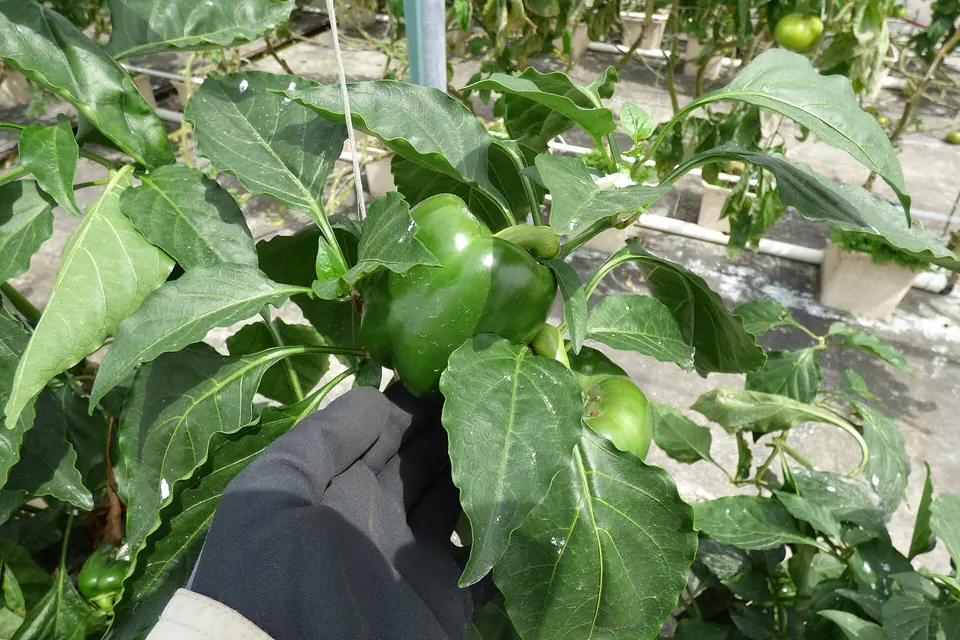
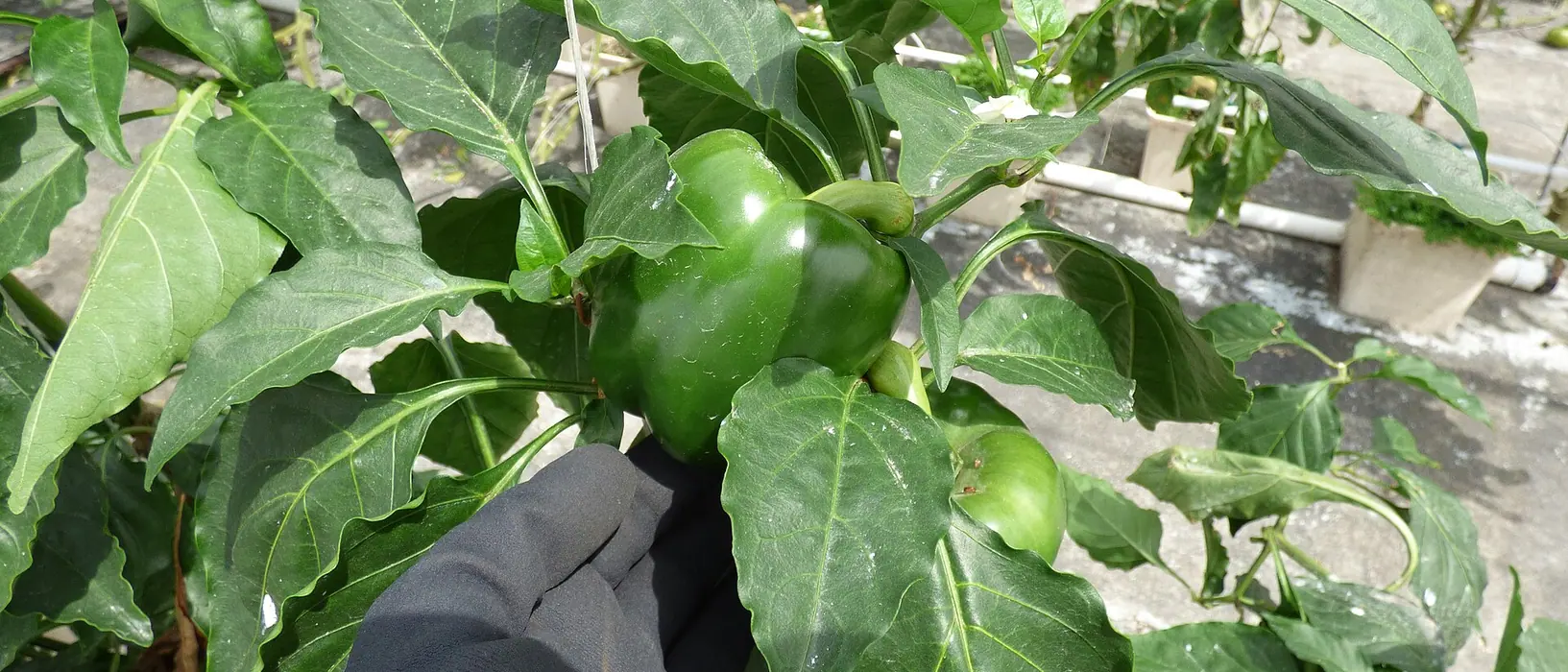
Pepper greenhouses
Sweet pepper rewards stability. We build greenhouses with the height, even climate and root-zone control needed for a crop that stays in place for most of the year.
- Typical yield, per year
- 25–32 kg/m²
Growing pepper under glass
Sweet pepper is a slow, long-season crop. Planted once, it is trained on two or three stems along a string and harvested over many months. The plant sets fruit in waves, called flushes: a heavy set is followed by weeks with few new fruits. Managing those flushes through temperature, light and fruit load is the core of pepper growing.
Pepper is more sensitive than tomato to root-zone problems and to direct radiation on the fruit. It needs a steady substrate temperature, an uninterrupted calcium supply, and diffuse light or shading in bright climates to prevent sunscald and blossom-end rot. In return it is well suited to biological crop protection, because its flowers supply pollen that sustains predatory mites and bugs.
Depends on colour and variety, light sum and crop length; harvesting green gives more weight than red, yellow or orange.
Optimal greenhouse parameters
| Gutter height | 5.5–7 m |
|---|---|
| Temperature, day / night | 21–26 °C / 17–19 °C |
| Relative humidity | 65–80% |
| Daily light integral | 20–30 mol/m² per day; the crop is usually grown unlit |
| Irrigation EC / pH | 2.2–3.0 mS/cm / 5.5–6.0 |
| Plant density | 6–7.5 stems per m², with two or three stems per plant |
| CO2 level | 600–1,000 ppm |
Typical ranges, refined per variety and climate.
The configuration we recommend
A starting point. We adjust it to your site and budget.
Venlo greenhouse, 6 m gutter or higher
The crop reaches three to four metres by the end of the season and needs stable air above it.
Diffuse glass or a seasonal diffusing coating
Scattered light penetrates the dense canopy and reduces sunscald on exposed fruit.
Two-stem V-system on stone wool or coco
The V-shape opens the canopy to light and keeps the fruit load per stem manageable.
Pipe-rail and growth-pipe heating
Even heat keeps the root zone and the fruit warm and helps to level out fruit set.
Energy and shade screens
Screens limit night heat loss and midday radiation, both of which disturb fruit set.
Solutions that matter most
Greenhouse constructionA tall structure with a diffusing cover suits a long, dense pepper crop.
Cooling & heating systemsPepper sets fruit poorly outside a narrow temperature band, so both heating and cooling capacity matter.
Hydroponic & substrate systemsA stable root zone prevents the calcium shortages behind blossom-end rot.
Plant protection & IPMPepper is among the crops best suited to biological control with predatory mites and Orius.
What drives the business case
We build the financial model with your own prices and costs. These are the levers that move it most.
| Driver | What moves it |
|---|---|
| Yield per m² | Light sum, crop length, colour harvested and how evenly the flushes are managed |
| Sales price | Colour mix, fruit size and wall thickness, class I share and season |
| Energy cost per kg | A lower yield per m² than tomato spreads heat cost over fewer kilograms |
| Labour cost per kg | Stem training and selective colour harvest; less weekly crop work than tomato |
| Crop risk | Root-zone stability, virus and pest pressure over one long planting |
Best practices
What our agronomists hold to in our own greenhouse and on client sites.
Level out the flushes
Hold a steady 24-hour temperature and remove the first flowers, so the plant builds leaf area before it carries fruit.
Protect fruit from the sun
Keep enough leaf cover, use diffuse light and close the shade screen at peak radiation to avoid sunscald.
Keep calcium moving
Irrigate regularly, avoid high slab EC in hot weather and maintain transpiration to limit blossom-end rot.
Build predators on pollen
Release Amblyseius swirskii and Orius at first flowering. They establish on pepper pollen before thrips arrive.
Harvest to a colour plan
Picking green relieves the plant and raises weight; picking coloured fruit earns more per kilogram. Review the mix every week.
Pepper projects
All projectsOnly Baku Greenhouse Complex is a real project. The others are samples that show the layout and will be replaced with real references.
Questions we are asked
If yours is not here, write to us. An engineer replies within two working days.
Why is pepper yield so much lower than tomato?
The pepper plant grows more slowly and invests in thick-walled fruit with a high dry-matter content. A good unlit crop typically yields 25–35 kg/m² a year. The price per kilogram is usually higher, so the comparison should be made on margin, not on weight.
Is supplemental lighting used for pepper?
Traditionally pepper is grown unlit, planted in winter and harvested from spring to autumn. Lit pepper for winter harvest is developing, but it requires careful management of fruit set and plant balance. We assess it against local winter prices.
Can pepper be grown in a film greenhouse?
Yes. In mild and hot climates pepper is widely grown in multi-span film greenhouses with good ventilation and shading. Yield is lower than in a heated glasshouse, and so is the investment; substrate cultivation and climate control still improve results considerably.
Plan your pepper greenhouse
Tell us the country, the crop and the area. You get a confirmation at once and an engineer’s reply within two working days.
- Preliminary layout and budget range
- A visit to our 20-hectare reference greenhouse
- Support in English, Russian and Azerbaijani