Tomato greenhouses
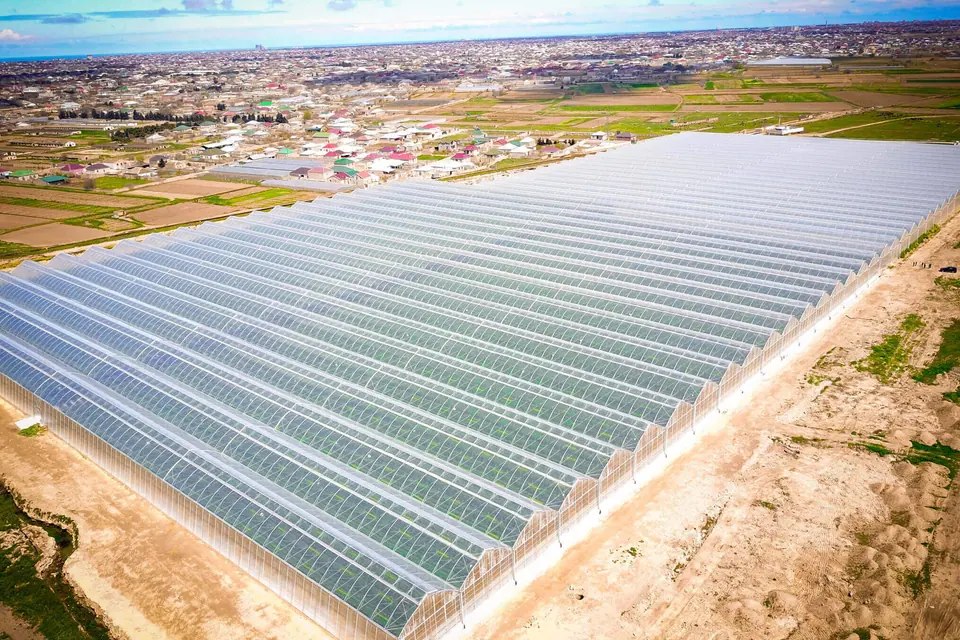
Tomato is the crop we know best: we grow it ourselves on 20 hectares in Zira, Baku. We build Venlo greenhouses with the height, light and climate control a high-wire crop needs.
- Typical yield, per year
- 50–70 kg/m²
Growing tomato under glass
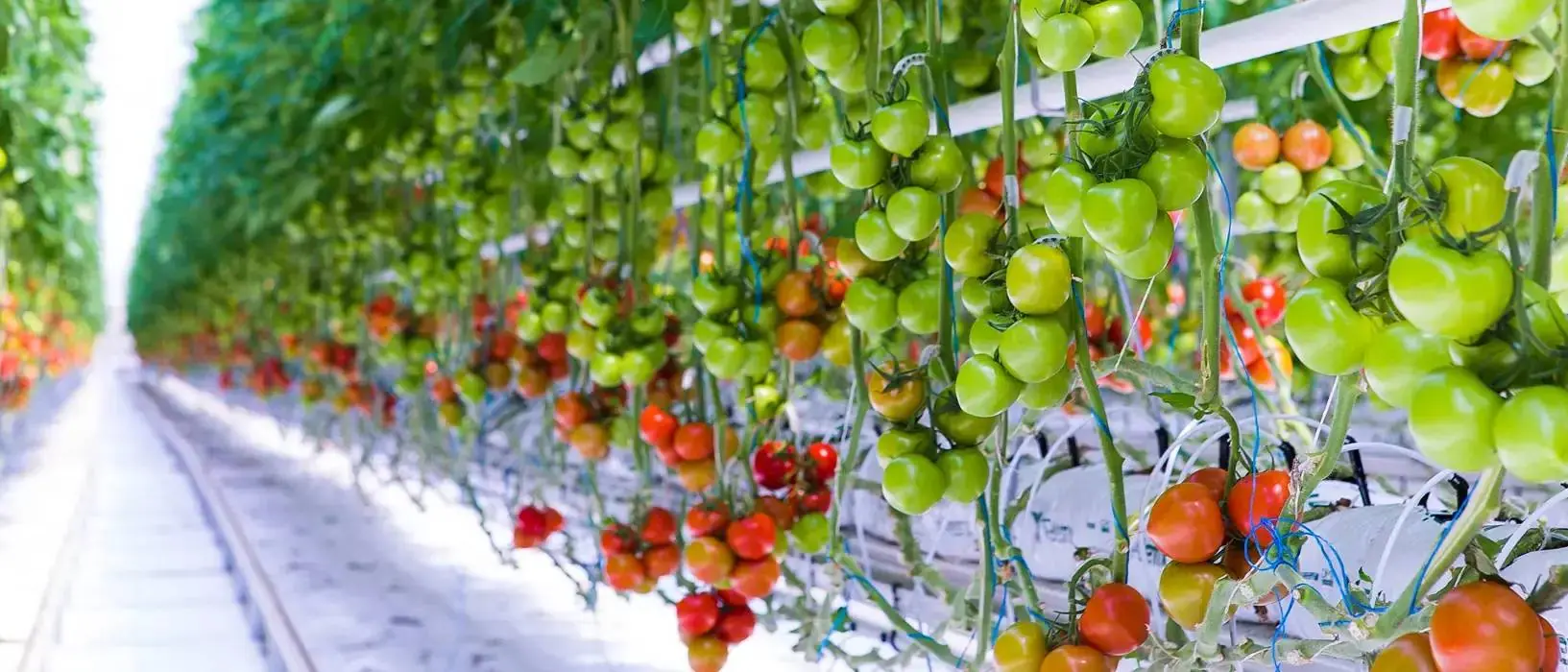
Tomato is the reference crop of high-tech horticulture and the most common choice for a first greenhouse investment. Grown on a high wire in substrate, the plant is lowered week by week and stays productive for most of the year. Yield depends above all on light, so the structure, the glass and the lighting are specified to put as much of it on the crop as possible.
Grow Group has grown tomatoes in its own 20-hectare greenhouse in Zira, Baku since 2011, using biological crop protection. That operating experience informs how we specify a tomato project: gutter height for a long crop, heating circuits at the fruit and at the growing tip, CO2 dosing, and hygiene barriers against virus. Each project is adapted to the variety type and the market it will serve.
Depends on variety type, light sum and crop length; cherry and cocktail types yield less by weight, and unlit crops sit below this range.
Optimal greenhouse parameters
| Gutter height | 6–7 m |
|---|---|
| Temperature, day / night | 20–26 °C / 15–18 °C |
| Relative humidity | 65–80% |
| Daily light integral | 20–30 mol/m² per day; lighting typically 180–250 µmol/m²/s |
| Irrigation EC / pH | 2.5–3.5 mS/cm / 5.5–6.0 |
| Plant density | 2.5–3.5 stems per m²; up to 4 for cherry types |
| CO2 level | 600–1,000 ppm |
Typical ranges, refined per variety and climate.
The configuration we recommend
A starting point. We adjust it to your site and budget.
Venlo glass greenhouse, 6–7 m gutter
The height gives a stable climate above the crop and room for a long stem, screens and lighting.
Hanging gutters with stone wool or coco
Gutters lift the crop to working height and return the drain for reuse.
Pipe-rail and growth-pipe heating
Separate circuits warm the ripening fruit and the growing tip independently, and the pipe rail carries the trolleys.
Energy screen, with shade screen in hot climates
Screens save heat on winter nights and protect fruit and plant heads from summer radiation.
CO2 dosing and supplemental light
Both raise photosynthesis in the months when natural light limits the crop.
Solutions that matter most
Greenhouse constructionA tall Venlo structure with high light transmission is the base of every high-wire tomato project.
Climate control systemsTomato responds to small shifts in temperature and humidity, so tight control shows directly in fruit set.
Lighting solutionsIn continental winters, supplemental light is what makes a year-round harvest possible.
Plant protection & IPMWhitefly, Tuta absoluta and ToBRFV make hygiene and biological control central to a tomato crop.
What drives the business case
We build the financial model with your own prices and costs. These are the levers that move it most.
| Driver | What moves it |
|---|---|
| Yield per m² | Light sum, lighting level, variety type, crop length and the skill of the grower |
| Sales price | Season of harvest, variety segment, class I share and distance to market |
| Energy cost per kg | Local gas and power tariffs, screens, CHP and the severity of the winter |
| Labour cost per kg | Wage level, training, work organisation and internal transport |
| Capital cost | Level of structure and equipment, freight, local civil works and financing terms |
Best practices
What our agronomists hold to in our own greenhouse and on client sites.
Keep the plant in balance
Weekly measurements of stem thickness, leaf length and flowering height show whether the crop is too vegetative or too generative. Temperature and irrigation are adjusted to correct it.
Irrigate on radiation
Start one to two hours after sunrise, stop well before sunset and let the frequency follow the light sum. Aim for 20–35% drain over the day.
Match fruit load to light
Truss pruning and stem density are set to the light available, with extra stems added in spring as light increases.
Pollinate with bumblebees
Hives distributed through the greenhouse give reliable fruit set. Check flowers for bite marks to confirm activity.
Enforce virus hygiene
ToBRFV spreads on hands and tools. Controlled entry, clean clothing and disinfection are daily routine, not an emergency measure.
Tomato projects
All projects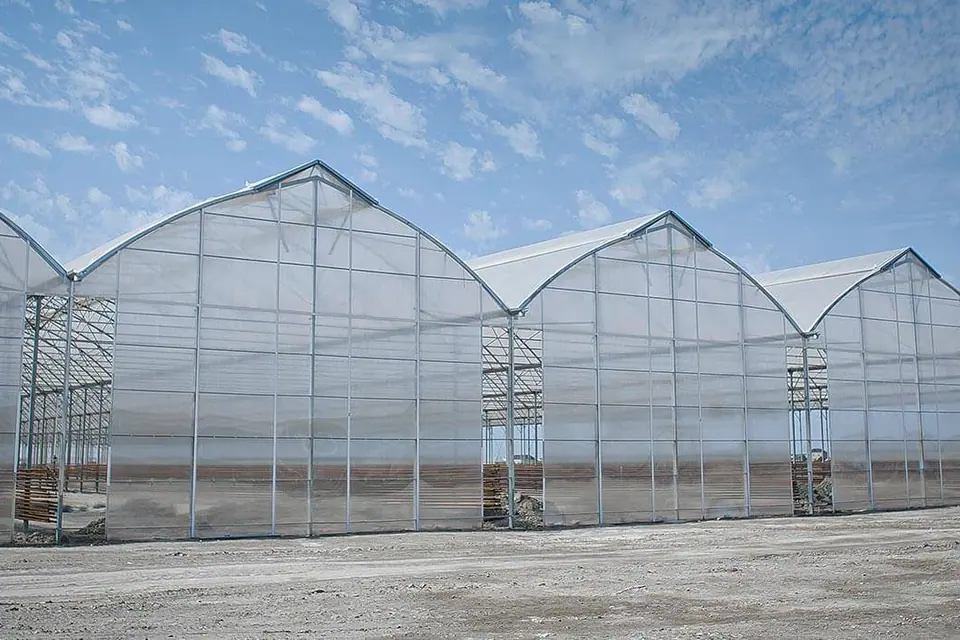
Only Baku Greenhouse Complex is a real project. The others are samples that show the layout and will be replaced with real references.
Questions we are asked
If yours is not here, write to us. An engineer replies within two working days.
What is a sensible minimum size for a tomato greenhouse?
Technically any size can be built, but fixed costs such as the boiler house, the head grower and the packing line spread better over several hectares. Commercial projects often start with a first phase of a few hectares inside a master plan for more.
Which tomato type should we grow?
It depends on the market. Truss and beef types give the highest weight; cherry and cocktail types yield less but usually sell at a higher price per kilogram. We compare segments on local retail and export demand before fixing plant density and the grading line.
Can tomatoes be grown through a hot summer?
With pad-and-fan or semi-closed cooling, shading and a heat-tolerant variety, production continues in dry heat, although fruit set and quality fall at very high temperatures. Many growers in hot regions schedule the crop change for the hottest weeks instead.
Plan your tomato greenhouse
Tell us the country, the crop and the area. You get a confirmation at once and an engineer’s reply within two working days.
- Preliminary layout and budget range
- A visit to our 20-hectare reference greenhouse
- Support in English, Russian and Azerbaijani