Energy solutions
Energy and labour are the two largest operating costs of a heated greenhouse. We calculate heat, power and CO2 demand across the year and size the energy plant to match.
- typical total efficiency of gas CHP when its heat is used
- up to 90%
- Technology partners
- Priva, Stolze
What it is
A heated greenhouse asks three things of its energy plant: heat, electricity and CO2. A gas-fired combined heat and power unit supplies all three at once, which is why CHP is common in lit vegetable production. Where gas is expensive or unavailable, the mix shifts to boilers, heat pumps, solar PV, or geothermal and industrial waste heat.
We begin with demand, not with equipment. Heat demand is calculated from local climate records, the screen configuration and the crop’s temperature strategy; electrical demand follows from the lighting plan. Only then are generators, boilers and the buffer sized and compared on local gas and electricity tariffs. Reducing demand first, with energy screens and a well-sealed structure, is almost always the cheapest step.
What it includes
- Energy demand study
- Annual and peak heat, power and CO2 demand calculated from climate data, screens, lighting and crop strategy.
- CHP units
- Gas engines with generator, heat recovery and flue-gas cleaning for CO2 dosing.
- Boilers
- Hot-water boilers with burner and flue-gas condenser, as base load or as peak and backup capacity.
- Heat storage
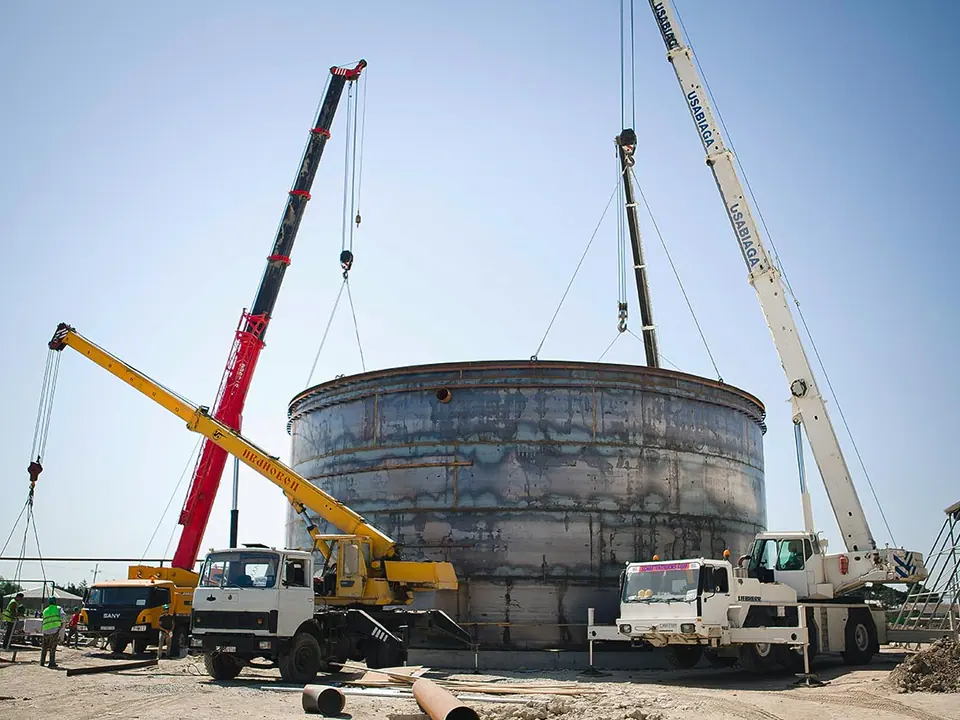
- An insulated buffer tank that decouples heat production from heat demand.
- Heat pumps and renewables
- Heat pumps, solar PV and connections to geothermal or waste heat where the site allows.
- Electrical connection
- Grid connection, synchronisation and switchgear, with standby generation for critical loads.
Options and configurations
The choice follows the crop, the climate and the size of the investment.
Gas boiler with CO2
Condensing hot-water boilers supply heat and clean flue-gas CO2; electricity comes from the grid.
Best suited toUnlit crops with reliable gas and grid connections
Combined heat and power
Gas engines generate electricity for lighting or export, while heat and cleaned exhaust CO2 go to the crop.
Best suited toLit crops, weak grids and a favourable gas-to-power price ratio
Heat pump and electric
Heat pumps upgrade low-temperature heat from ground, water, air or the greenhouse itself, powered from the grid or from PV.
Best suited toLow-carbon projects and sites with affordable electricity and no gas
Solar PV support
PV on service buildings or adjoining land offsets daytime loads such as cooling fans, pumps and cold stores.
Best suited toSunny regions with a high daytime electrical load
Technical specifications
Typical ranges for high-tech greenhouses. The exact figures for your project are calculated at the design stage.
| CHP electrical efficiency | Typically 40–44% |
|---|---|
| CHP total efficiency | Up to about 90% with full heat use |
| CHP sizing for lit crops | Commonly 0.5–1 MW electrical per hectare |
| Heat buffer | Typically 100–250 m³ per hectare |
| Energy screen saving | 20–40% of heat demand, depending on fabric and climate |
| Heat pump COP | Typically 3–5, depending on heat source and supply temperature |
| CO2 dosing capacity | Typically 100–200 kg per hectare per hour, from cleaned flue gas or liquid CO2 |
What you gain
Lower energy cost per kilogram
Matching generation to demand and storing surplus heat reduces the fuel burned for every kilogram harvested.
Three outputs from one fuel
CHP turns gas into power, heat and CO2, so little of the energy in the fuel is lost.
Security of supply
Backup boiler capacity and standby power protect the crop when the grid or one unit fails.
A smaller carbon footprint
Screens, buffers, heat pumps and solar reduce fossil fuel use and prepare the site for stricter buyer and lender requirements.
Decisions on local tariffs
Each option is compared on the gas and electricity prices the client will actually pay.
Questions we are asked
If yours is not here, write to us. An engineer replies within two working days.
When does a CHP unit make sense?
When the greenhouse can use the power, the heat and the CO2 at the same time, which typically means lit crops in a cold season. It also suits sites where the grid is weak or surplus power can be sold. Without lighting and with affordable grid power, a boiler is usually the simpler investment.
Can a greenhouse run without natural gas?
Yes. Heat can come from heat pumps, biomass, geothermal wells or industrial waste heat, and CO2 can be bought in liquid form. Investment and operating costs differ considerably, so we compare the alternatives over a full year before the structure is finalised.
How large should the heat buffer be?
A common range is 100–250 m³ per hectare. The buffer stores heat produced during the day, when the CHP runs for lighting or the boiler runs for CO2, and releases it at night. Larger buffers add flexibility where energy prices vary through the day.
Can solar panels go on the greenhouse roof?
Standard panels on the roof shade the crop, and lost light is lost yield, so we do not recommend them for vegetable production. PV belongs on the packing hall, the technical building or adjoining land. Semi-transparent PV glazing exists, but it still trades light for electricity.
Get a quote for energy solutions
Tell us the country, the crop and the area. You get a confirmation at once and an engineer’s reply within two working days.
- Preliminary layout and budget range
- A visit to our 20-hectare reference greenhouse
- Support in English, Russian and Azerbaijani