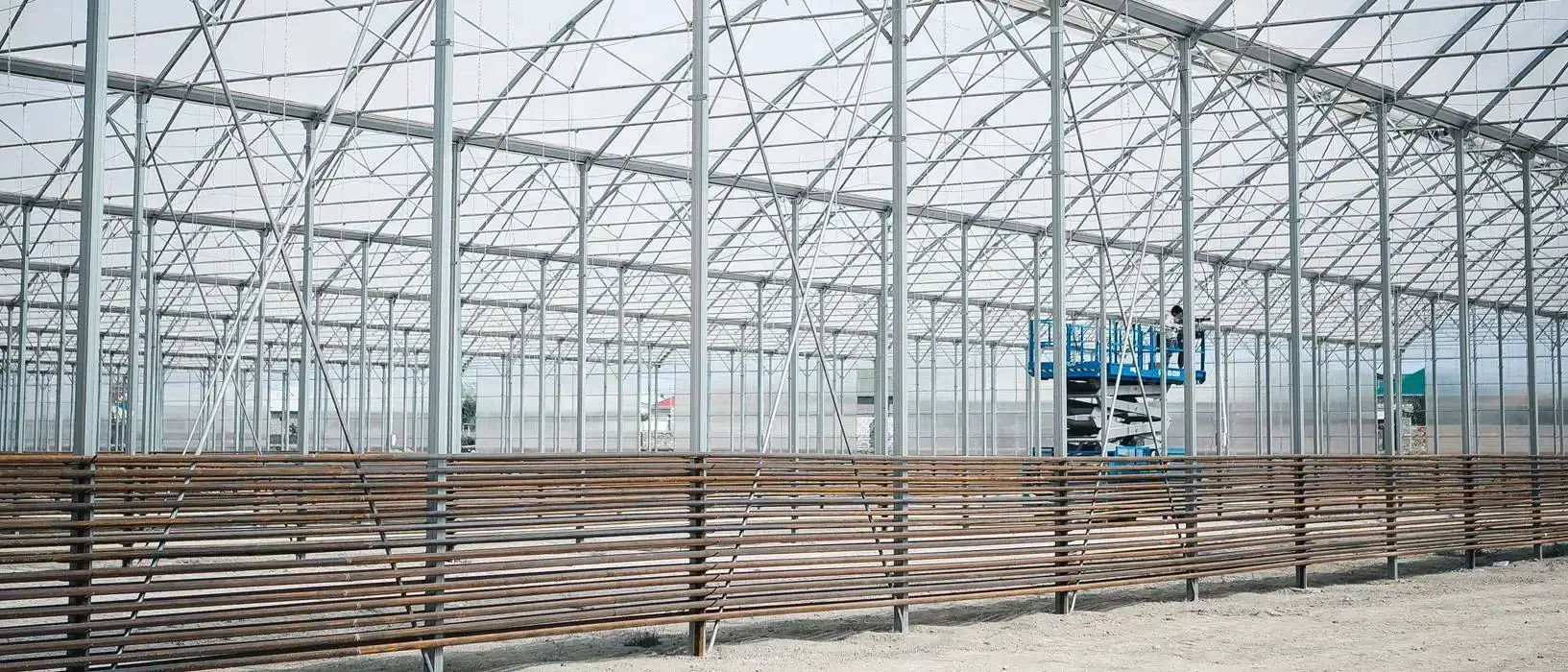
Greenhouse solutions for Eastern Europe & Balkans
In Eastern Europe and the Balkans energy cost decides whether a greenhouse pays. We design for low heat demand, efficient lighting and the standards that apply at each site.
- Countries
- Poland, Romania, Bulgaria, Serbia, Hungary
- We work in
- English
The market
Growers in Eastern Europe and the Balkans work in a temperate climate with cold, dull winters and warm summers. The technology is familiar here, and so are the Dutch and French manufacturers behind it. What has changed is the price of energy and the attention paid to emissions. A new greenhouse or a retrofit is now judged on kilowatt-hours per kilogram as much as on yield.
Our role in Europe is that of a project partner. We design and deliver complete greenhouses with equipment from manufacturers the group represents in Azerbaijan, including Richel Group, Priva, Stolze and Grodan, and we add the operating experience of a group that has grown tomatoes on its own 20-hectare site since 2011. For the client that means one team for engineering, installation and agronomy.
What the climate asks of the design
- Cold, low-light winters
- Short, overcast days limit winter production. Supplemental lighting, high-transmission glass and a clean roof matter more here than in sunnier regions, and the lighting plan is checked against the available grid capacity.
- High energy prices
- Heat demand is cut at the source: double energy screens, tight glazing, a buffer tank and dehumidification that does not waste heat. Then we compare boilers, CHP and heat pumps against local gas and electricity tariffs.
- Warm, humid summers
- Summer humidity on the plains raises disease pressure. Generous roof ventilation, air circulation fans and a climate strategy built on vapour pressure deficit keep the crop active and dry.
- Regulation and standards
- Structures, electrical work and water discharge must meet European and national rules. We calculate structures to the standards that apply at the site and design closed irrigation, so that drain water is reused instead of discharged.
Solutions we recommend here
How we work locally
Financing and public support schemes differ from country to country. We assess them with you for each project.
- Project management and documentation are in English, with structural calculations to the standards that apply at the site.
- We specify equipment from European manufacturers, which keeps delivery routes short and spare parts close.
- For existing glasshouses we carry out a retrofit survey: what to keep, what to replace and in which order.
- After handover our agronomists support the crop through scheduled visits and remote review of climate data.
Questions we are asked
If yours is not here, write to us. An engineer replies within two working days.
Why work with a company from Baku on a European project?
Because we are both a contractor and a grower. We deliver equipment from the same European manufacturers that local suppliers use, and the group has run its own 20-hectare tomato greenhouse since 2011, so our engineering decisions are tested against a real crop.
Can an older glasshouse be made energy-efficient?
Often, yes. A second energy screen, a buffer tank, a modern climate computer and LED lighting usually give the largest savings. We survey the structure first, because gutter height and load capacity decide which upgrades are possible.
Are grants or subsidised loans available?
Support schemes differ by country and funding period, so we do not quote them in general terms. We assess what applies to your project and prepare the technical documentation that applications normally require.
Planning a greenhouse in Eastern Europe & Balkans?
Tell us the country, the crop and the area. You get a confirmation at once and an engineer’s reply within two working days.
- Preliminary layout and budget range
- A visit to our 20-hectare reference greenhouse
- Support in English, Russian and Azerbaijani